Know the people you are asking to stand beside you.
Mikhail Usher, Alexander Susi and Mitchell Bromberg
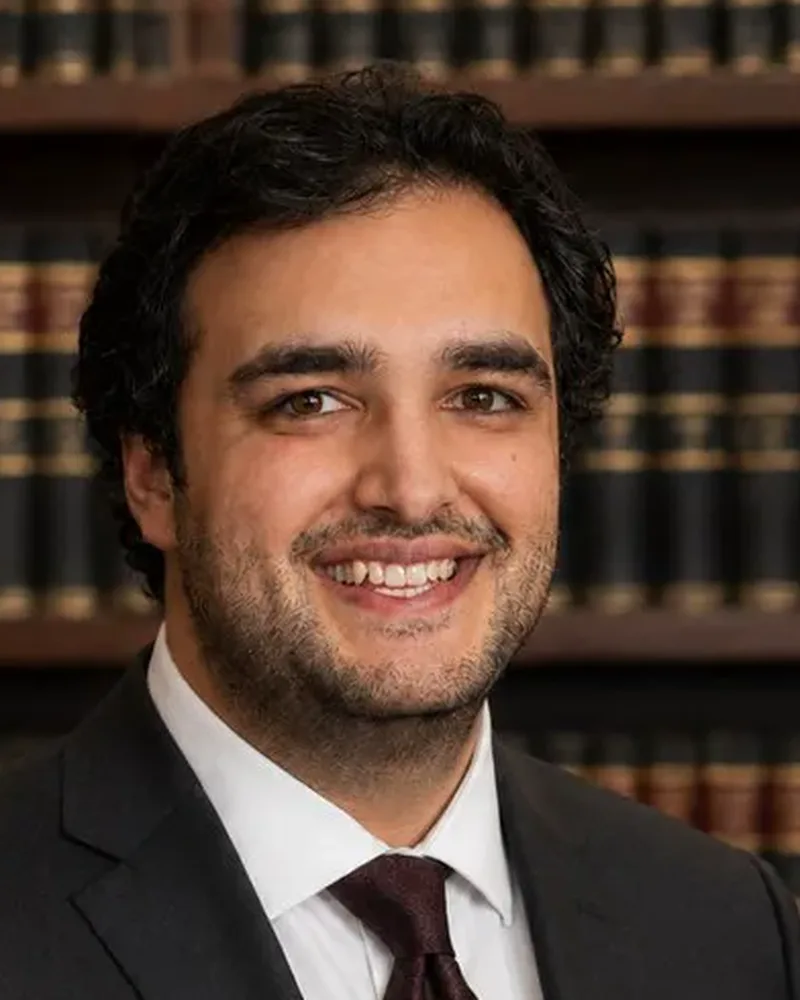
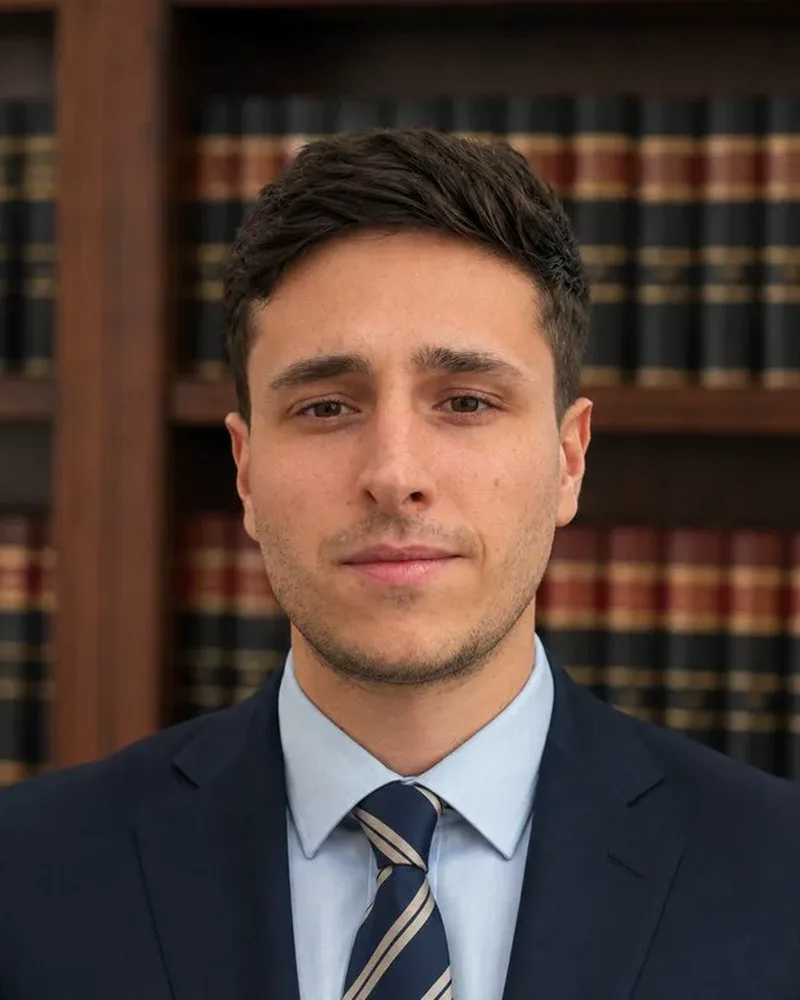
Three attorneys, supported by the firm’s legal staff. The photographs on this page are the attorneys themselves. Together they have 20+ years of combined practice, and the court admissions below are theirs.
Three attorneysCase assessment, damages math, demand letters, court filings, motions, and client counseling.Admitted in NY, NJ, FL and PAFederal admissions in the Eastern and Southern Districts of New York, the District of New Jersey, and the Western District of Pennsylvania.The firm’s legal staffSupport for pay records, week-by-week calculations, filings, deadlines, and client communication in any of the 17 languages we speak.
IN THE COURTS
Real attorneys. Real federal-court work.
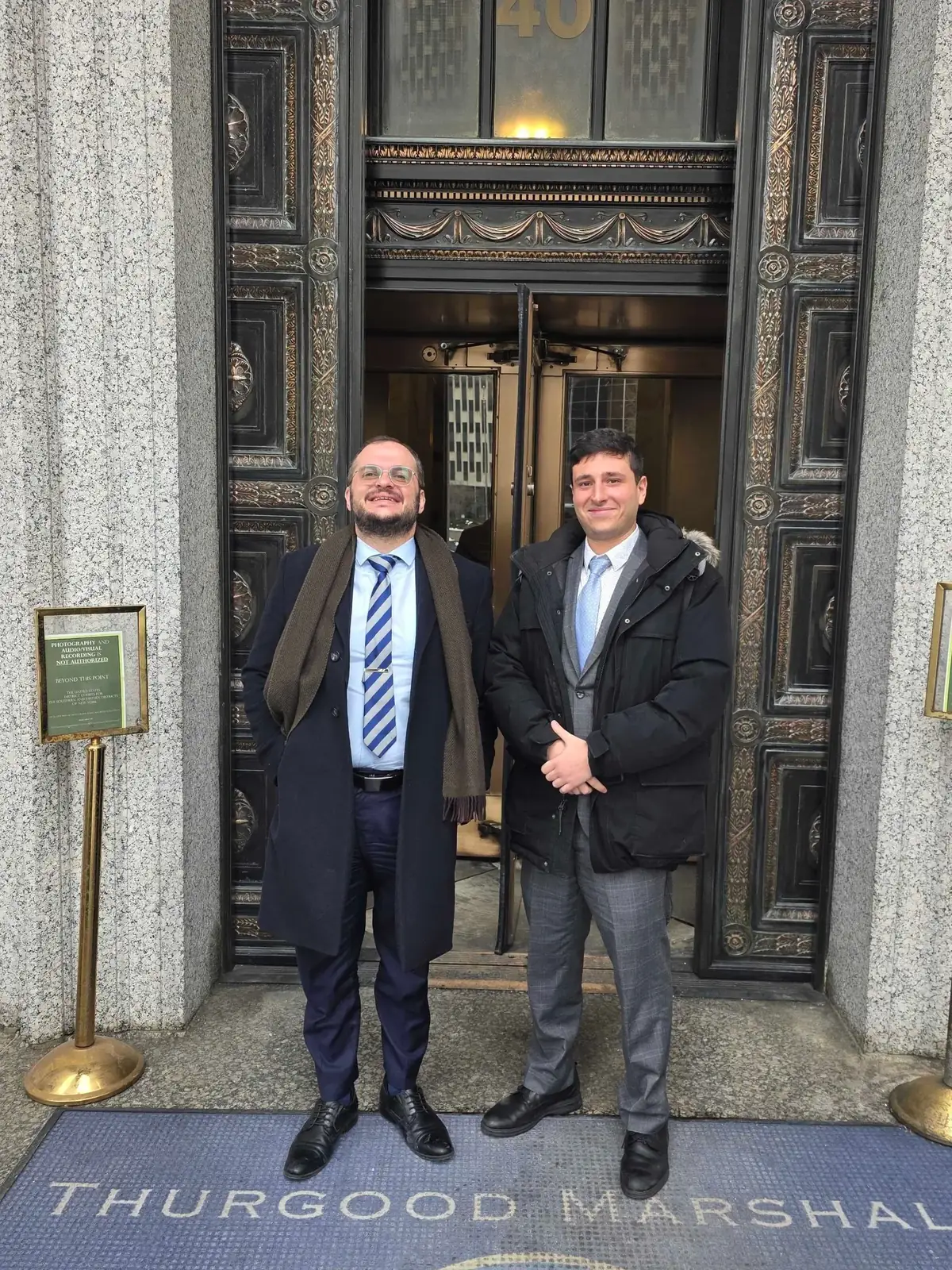
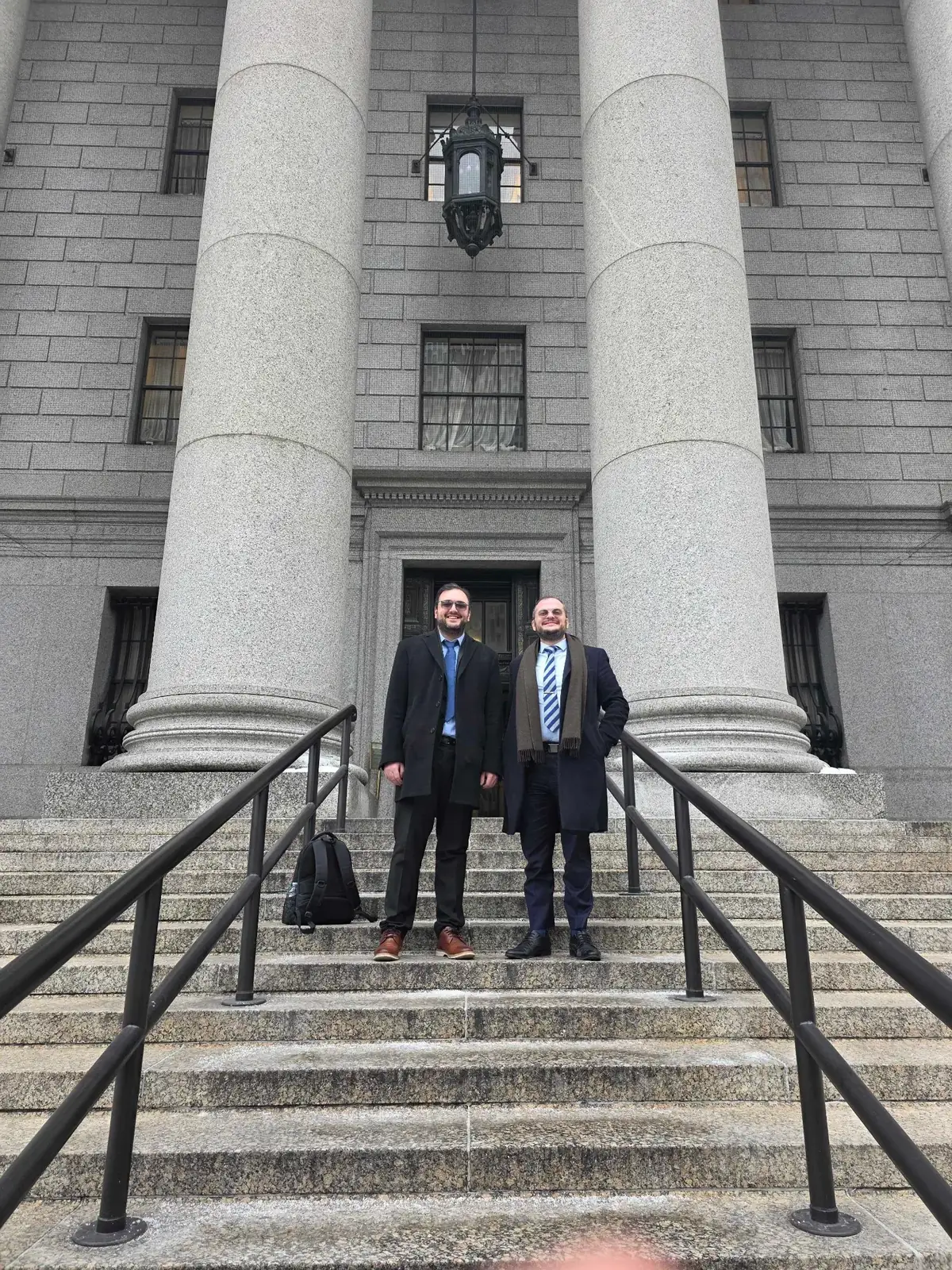
These photographs show members of the firm outside federal court. We use the lawyers’ actual photographs throughout this page.
Members of the Usher Law Group legal team outside federal court.
01
Founding & Managing Attorney
Mikhail Usher, Esq.
Reads your pay record before he reads the law.
Mikhail Usher founded Usher Law Group P.C. and runs it from Brooklyn, with a second office in Aventura, Florida. If you send the firm a message about your pay, he is the lawyer who decides what happens next. Do the facts support a claim? Which court and which law give you the strongest position? What should we demand from the employer, and when should we file?
He has practiced since 2011 in the state courts of New York, New Jersey and Florida and in the federal courts of New York and New Jersey, at trial and on appeal. He is admitted in the U.S. District Courts for the Eastern and Southern Districts of New York and the District of New Jersey, and he has argued before the First, Second and Third Circuit Courts of Appeals. He has also represented individuals against the federal government in hundreds of contested immigration and asylum matters. In those cases the other side held most of the paperwork. Wage cases are often the same: the employer holds the records, and the worker knows what happened.
Clients meet with him directly. He explains the law in plain words, in English, Russian or Spanish. He checks the time limits before anything else. He tells people when a case is not worth bringing as plainly as when it is. If the firm takes your matter, the strategy is his, from the first letter to the courtroom.
He earned his B.A. from Brooklyn College (CUNY) and his J.D. from St. Thomas University School of Law.
Court admissionsNew Jersey, New York, and Florida. U.S. District Courts for the Eastern and Southern Districts of New York and the District of New Jersey. He has argued before the First, Second and Third Circuit Courts of Appeals.
✓ A straight answer on whether you have a claim
✓ Time limits checked before anything else
✓ Strategy set by the lawyer who will argue it
✓ Plain words, in English, Russian or Spanish
Education
B.A., Brooklyn College (CUNY) · J.D., St. Thomas University School of Law
Admissions
New Jersey (2011) · New York (2012) · Florida (2013) · U.S. District Courts for the Eastern and Southern Districts of New York and the District of New Jersey · Has argued in the First, Second and Third Circuit Courts of Appeals
02
Senior Associate Attorney
Alexander Susi, Esq.
Tests your case before the employer’s lawyer can.
Alex Susi is the firm’s senior associate. When a wage matter moves from a first conversation to a demand letter or a complaint, he is the lawyer who tests every piece of it: whether the law covers the employer, whether a claimed exemption really applies, which court can hear the case, and what the pay records prove.
He handles wage and hour claims, federal lawsuits, mandamus actions (suits to make a government agency act), appellate briefs and arbitration. He drafts the demand letters, complaints, motions and appellate briefs. He organizes the record, weighs the risks of each path, and moves the matter through negotiation, settlement, arbitration or court. He is admitted in New York, New Jersey and Pennsylvania and in the U.S. District Court for the Western District of Pennsylvania.
Clients see his work in the documents that carry their case: a demand letter that sets out the numbers, a complaint that tells the story week by week, and a brief that answers the employer’s defenses. He writes for the judge who will read it and for the client who has to live with the result.
He earned his A.B. from New York University in 2018 and his J.D. from Boston University School of Law in 2021.
Federal litigation experienceAdmitted in the U.S. District Court for the Western District of Pennsylvania. Federal research, record development, motion and appellate briefing, procedural analysis, and written advocacy in federal civil, mandamus, and appellate matters.
✓ Your case tested against the law before it is filed
✓ Demand letters, complaints and briefs that show the math
✓ The risks of each step, explained before you take it
✓ Arbitration, negotiation and appeals when needed
Education
A.B., New York University (2018) · J.D., Boston University School of Law (2021)
Admissions
New York (2022) · New Jersey (2023) · Pennsylvania (2023) · U.S. District Court for the Western District of Pennsylvania
03
Associate Attorney
Mitchell Bromberg, Esq.
Turns a normal week into evidence.
Mitchell Bromberg is the lawyer who builds the timeline. He takes your account of the job, the texts, schedules and pay stubs on your phone, and whatever records the employer kept. Then he lays them out week by week: hours worked, pay received, and the difference the law says is owed.
He works on wage and hour cases, civil-rights cases, mandamus actions (suits to make a government agency act) and other federal matters, with an emphasis on evidence, legal research and clear written presentation. He is admitted in New York and New Jersey and in the U.S. District Courts for the Eastern and Southern Districts of New York and the District of New Jersey.
Workers often arrive with no paperwork at all. That is where he starts: with your memory of a normal week, the messages on your phone, and the people who saw you work. The law puts the duty to keep records on the employer. His job is to show what those records should have said.
He earned his J.D. from the Benjamin N. Cardozo School of Law in 2023.
Federal litigation experienceAdmitted in the Eastern and Southern Districts of New York and the District of New Jersey, with federal work focused on evidence development, research, briefing, and organization of the record.
✓ A week-by-week record of your hours and pay
✓ Your texts, schedules and photos put to work
✓ Research that fits the facts of your job
✓ A record a judge can follow
Education
J.D., Benjamin N. Cardozo School of Law (2023)
Admissions
New York · New Jersey · U.S. District Courts for the Eastern and Southern Districts of New York and the District of New Jersey
US
FEDERAL AND STATE FORUMS
Prepared for the court where the claim may have to be proved.
Wage cases for New York and New Jersey workers are brought in the U.S. District Courts for the Eastern and Southern Districts of New York and the District of New Jersey, and in the New York Supreme Court and the New Jersey Superior Court. The team’s admissions cover those courts, and Mikhail Usher has argued in the First, Second and Third Circuit Courts of Appeals. Which court fits a given case depends on the facts, the laws that apply, whether coworkers are involved, and any arbitration agreement; we evaluate that for every matter.
Federal-court context photograph from the firm’s own files.
HOW THE TEAM WORKS
Your story starts the case. The lawyers build it from there.
The team’s job is to make a shorted paycheck clear to a judge, or to the employer’s lawyer, without losing the person behind it.
01
Listen for what matters
Where you worked, what you did, when you worked, what you were paid, and what happened when you asked about it.
02
Test the legal foundation
Which laws cover the employer, whether an exemption really applies, how far back the claim reaches, what proof exists, and who can be held responsible.
03
Choose a deliberate path
Explain the practical options and, if the firm takes your case, build the week-by-week record and the strategy around your facts.
Ready to put your pay in front of a lawyer?A few clear facts are enough to begin.

 Mikhail Usher, Alexander Susi